 Skip to content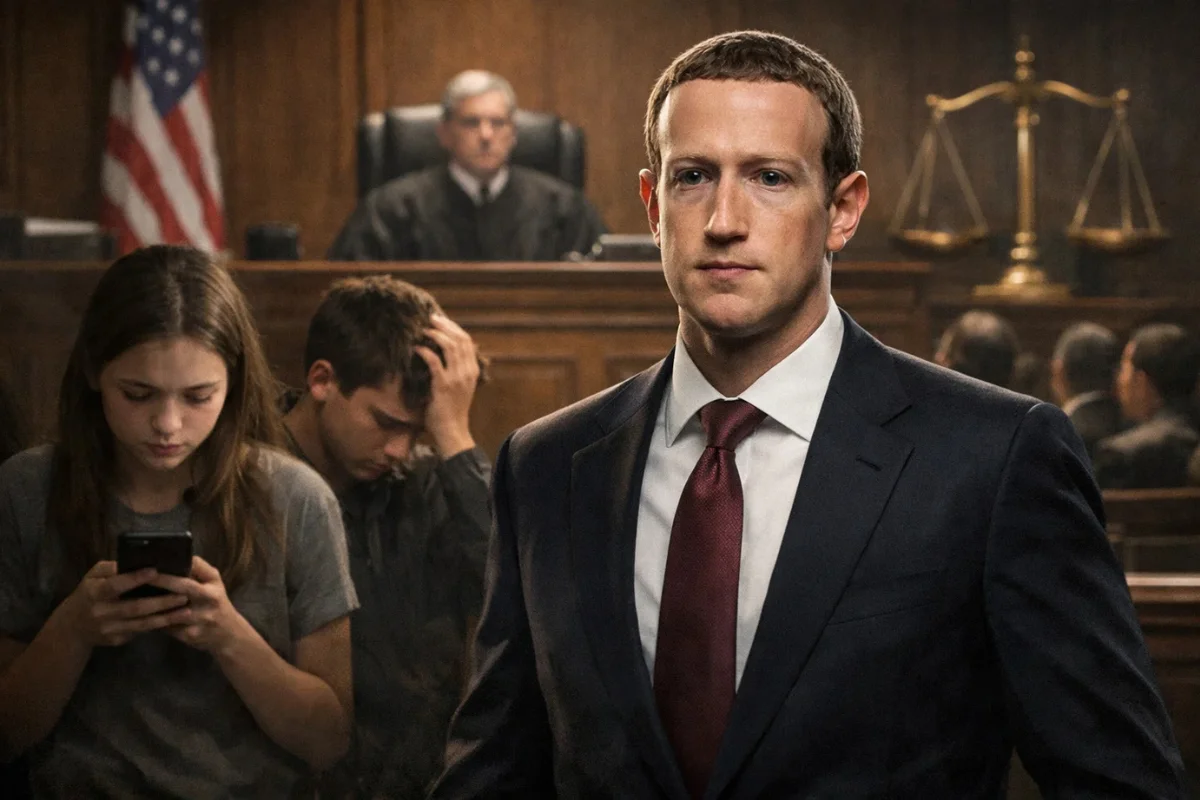
A landmark U.S. trial is now putting Big Tech’s most controversial accusation in front of a jury: that platforms were designed to addict children and that the damage shows up later as anxiety, depression, and body-image issues. With Mark Zuckerberg expected to testify (alongside YouTube leadership), this isn’t just another policy debate anymore it’s a courtroom fight over product design and accountability.
Instagram, YouTube addiction trial kicks off in Los Angeles
The video explains why this case is being treated like a “bellwether”: it’s one of the first times a jury will hear claims that features like endless feeds and engagement loops weren’t accidental they were built to keep young users coming back. When you watch, track the legal split: plaintiffs argue “engineered addiction,” while the companies argue there’s no proven direct link and point to other factors.
The public reaction is already split, too. Some parents and advocates see this as a long-overdue “Big Tobacco moment” for social media. Others worry it turns a complex mental-health crisis into a simple villain story and that parents, schools, and society will still be left holding the bag even if Big Tech loses.
A tighter explainer focused on what’s actually happening in court, what executives may be asked, and what the outcome could change.
Trial begins in case accusing Meta, YouTube of addicting children to their platforms
What makes the stakes bigger is what comes next: this is expected to be the first of multiple trials this year, and a loss could pressure companies to redesign youth experiences, change default settings, and potentially open the door to more liability over “addictive” product choices. Even if Meta and YouTube win, the testimony and internal documents aired in court could still reshape public trust and how lawmakers move next.
