 Skip to content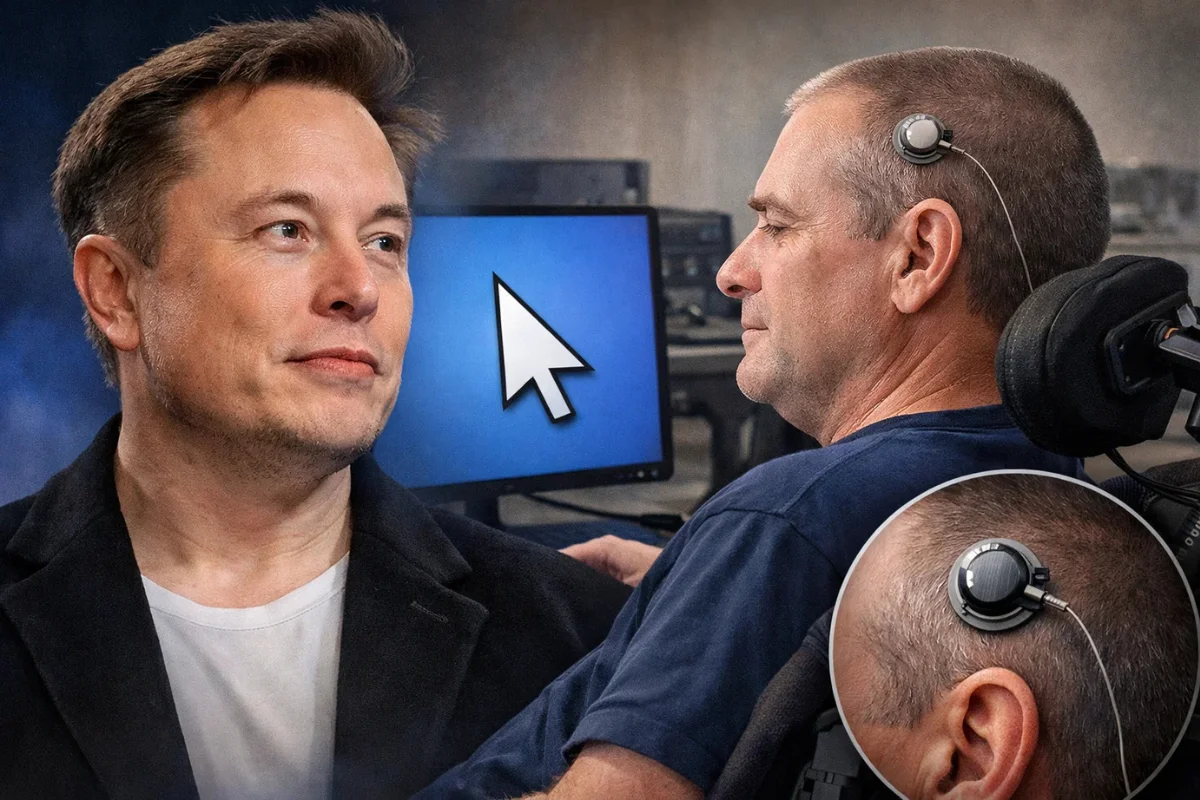
A man in the first UK trial of Elon Musk’s Neuralink says the brain chip “feels magical” because, after paralysis left him unable to move, he can now control a computer cursor just by thinking about moving his hand.
Neuralink UK Trial: Paralyzed Man Controls Computer With His Mind
The moment that hooks people is how direct it looks: the chip reads brain signals, AI learns the pattern, and the “thought” becomes a click or cursor movement on-screen. When you watch, focus on what makes this feel unreal: he’s flipping pages, highlighting text, opening windows like he’s got his hands back, but only in the digital world.
Reactions are mixed in a very human way. Some people see a genuine breakthrough for independence, especially for severe paralysis and locked-in patients. Others immediately bring up the unanswered stuff: long-term safety, device reliability, and what privacy even means when brain data is being decoded and transmitted wirelessly.
Use an embed-friendly explainer about how Neuralink works (electrodes, robot surgery, decoding signals, risks).
How Neuralink Works: Brain Signals to Cursor Control Explained
The stakes are bigger than one inspiring demo because this tech only “wins” if it stays safe and stable over time and if patients can trust the system with the most personal data imaginable. For now, it’s hoped you can watch on a laptop screen, with a long road ahead before it becomes routine medicine.
