 Skip to content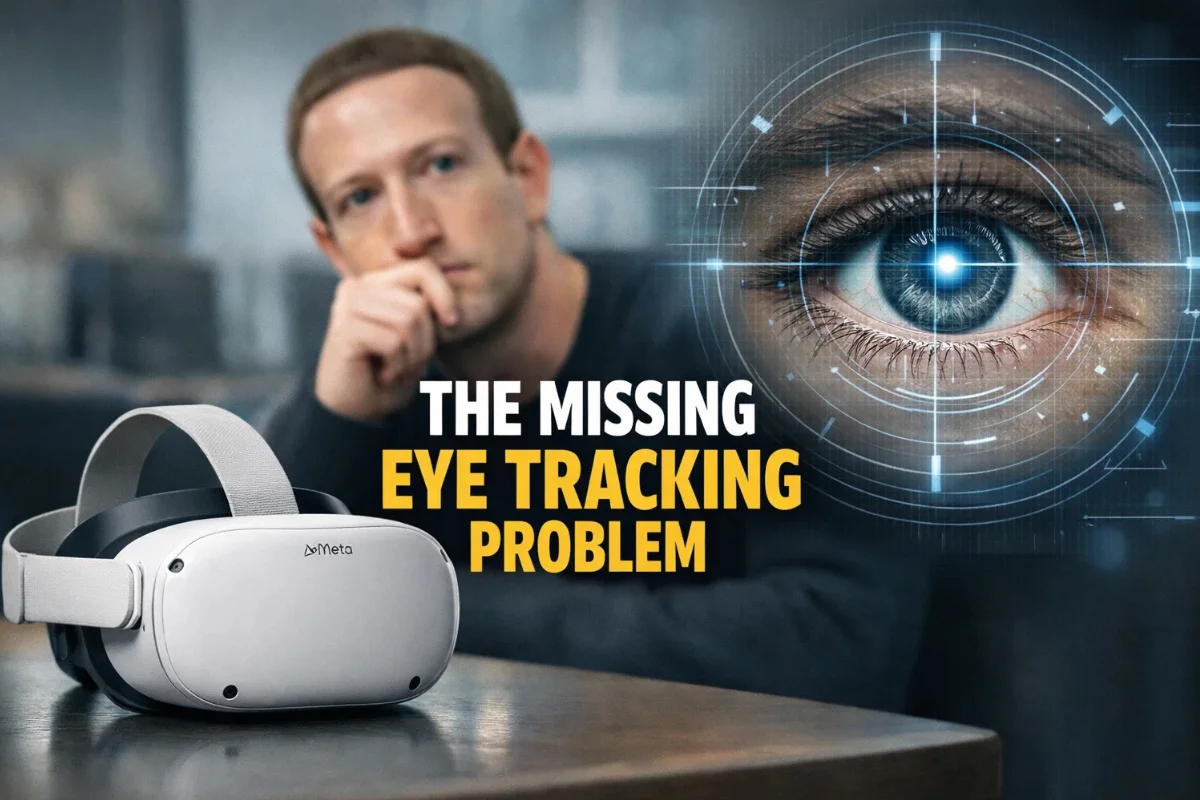
Mark Zuckerberg put a fortune into VR headsets. He thought they would be the next big thing like a personal computer. But he somehow forgot a key part. He left out the tool that lets you tell the computer what to do. That tool is eye tracking. It is fast becoming the mouse for headsets. Other companies are using it to build their devices. But Meta’s popular headsets mostly do not have it. After the recent big changes at Meta’s Reality Labs that missing feature suddenly looks different. It does not look like just a small detail on a list anymore. It looks like a real problem with their whole plan.
Exclusive: We tried Meta’s AR glasses with Mark Zuckerberg
When you watch the clip, notice how natural the interface feels when your eyes do the aiming and a small gesture does the “click.” That is the whole point shown in one demonstration. If VR and AR are really going to take the place of your laptop and phone they need to know what you want instantly. You should not have to work at it. Eye tracking gives you that. Controllers can never do it quite the same way.
The reactions are split. VR supporters and makers keep talking up eye tracking. They say it makes digital people look more real and makes everything run better. But people who doubt it point to the price. They worry about privacy. They are scared that data about what you look at becomes the next thing to buy and sell.
And after Meta cut jobs in its VR division a lot of folks are asking questions. They want to know if Meta is focusing on the right things for its headsets. Or is it just floating along while Apple and Valve and Google move ahead.
Oculus Explains VR Foveated Rendering
The real prize is controlling the whole system. Once eye tracking is normal it changes everything. It changes how apps are made. It changes the system software. It changes who ends up owning the next closed off digital world. Valve is already using eye tracking for ideas about how to stream video in VR. And Android’s new XR system is being built to work with your eyes and your hands together.
So Meta’s long wait to use it is getting more noticeable every single month. The big question is not whether VR is dead. The big question is this. Can Zuckerberg’s VR world grow big without the one feature every other company sees as basic.
